


Hotboxing the American Dream: California’s Cannabis Privilege
August 21, 2026
It wasn’t until I met my husband that I realized how cannabis-privileged I was.
He spent his early childhood between Arizona and Utah, where weed was treated more like a moral failure than anywhere else in the country—especially in the latter state. There weren’t endless strain menus or polished dispensaries with minimalist branding and terpene charts. Of course, the rest of the country didn’t have this yet either, but most of the weed he encountered was dry, seedy schwag that smelled like hay and barely did anything. Still, people were grateful to have it.
Meanwhile, I grew up in Southern California in the ’90s and early 2000s, where weed was technically illegal but culturally almost impossible to separate from everyday life.
Recreational legalization didn’t happen until I was already an adult, and there were no sleek dispensaries on every corner when I was growing up either. What we had instead was California’s strange cannabis gray area: smoke shops selling glass pipes next to incense burners, medical “collectives,” and illicit market dispensaries disguised as churches or wellness centers trying to survive long enough not to get raided.
But somehow, even then, cannabis felt culturally accepted. I didn’t fully understand how unique this was until I started meeting people from different states.
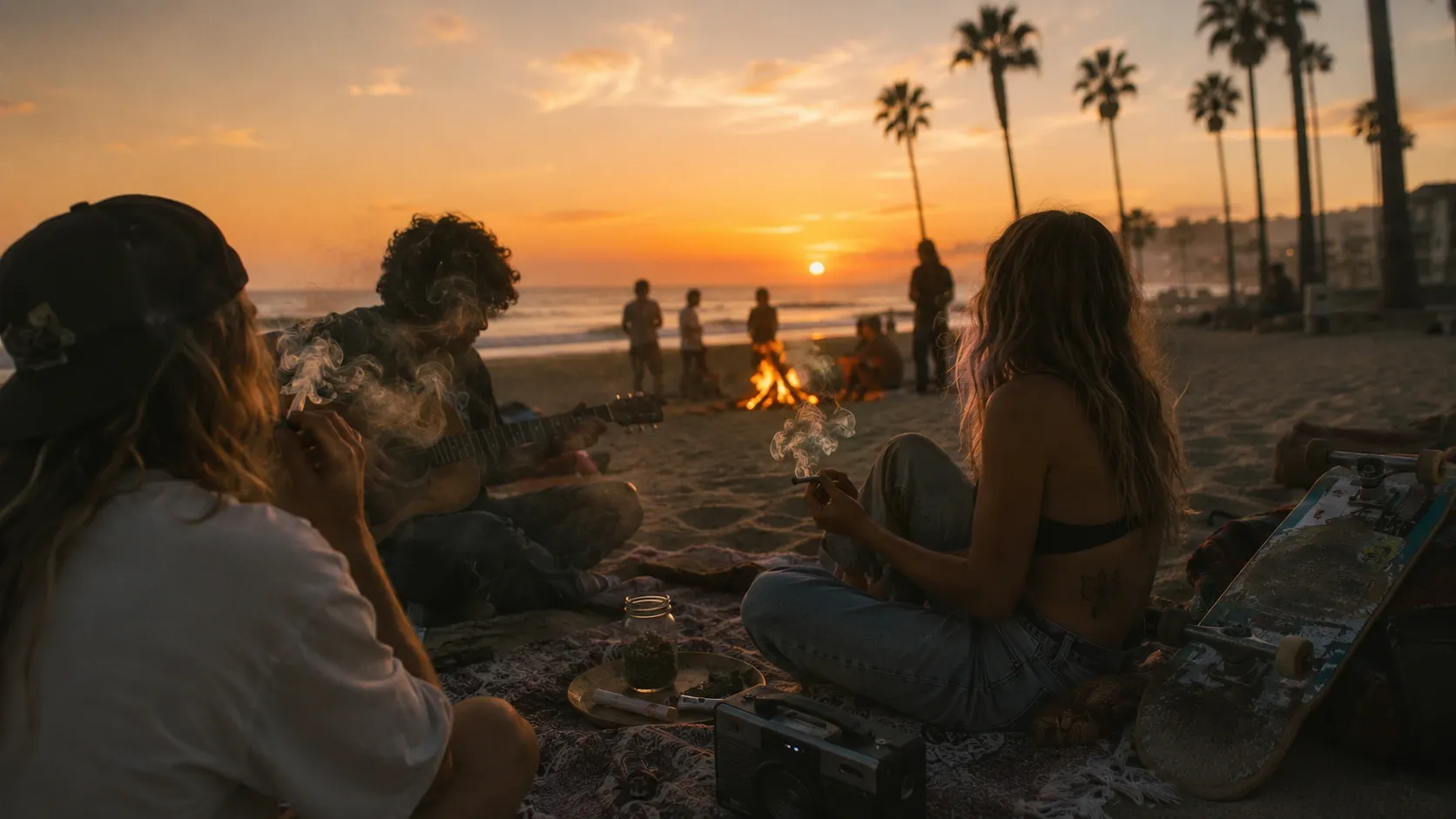
In California, weed wasn’t just a marker of rebellion or hedonism. It was woven into surf culture, skate culture, music culture, hippie culture, wellness culture. It was in the background of beach bonfires, garage bands, backyard hangs, and shaded parking lots.
Even interactions with police reflected that strange, cultural divide. I got pulled over a few times in high school with weed in the car and never got into serious trouble. Looking back, that feels less like luck and more like geography.
Meanwhile in other states, people’s lives were getting destroyed over amounts Californians barely blinked at.
And to be clear, California was never innocent in all of this. The War on Drugs devastated communities here too, especially Black and brown communities disproportionately targeted by policing and incarceration. Even in a state with a more visible cannabis culture, plenty of people still lost jobs, housing, opportunities, and years of their lives because of weed. That contradiction is part of California cannabis history too.
But culturally, there’s no denying the state developed a different relationship with cannabis than much of the country. Long before weed became a billion-dollar industry, California had already become the symbolic center of American cannabis culture. In 1996, Proposition 215 made it the first state to legalize medical cannabis, largely thanks to activists like Dennis Peron and Brownie Mary, who fought for compassionate access during the AIDS crisis in San Francisco.
That history matters because California didn’t just stumble into normalization. Communities worked hard to build it, despite racist legislation pushing against progress.
Patients, activists, growers, caregivers, underground operators, legacy cultivators. People created networks of access and protection long before legalization made cannabis socially acceptable or financially attractive. Even during prohibition, California still had some of the best weed in the country because generations of legacy growers stubbornly treated cannabis less like contraband and more like craft.
That kind of access shapes people.
Even now, in 2026, my husband still gets nervous smoking in public. My instinct is usually to laugh until I remember he grew up in a completely different version of America than I did. One where getting caught with weed could fundamentally alter your life, not just ruin your night.
For most of my life, I thought California’s relationship with cannabis was normal. Now I realize it was something people here spent decades fighting to create.