


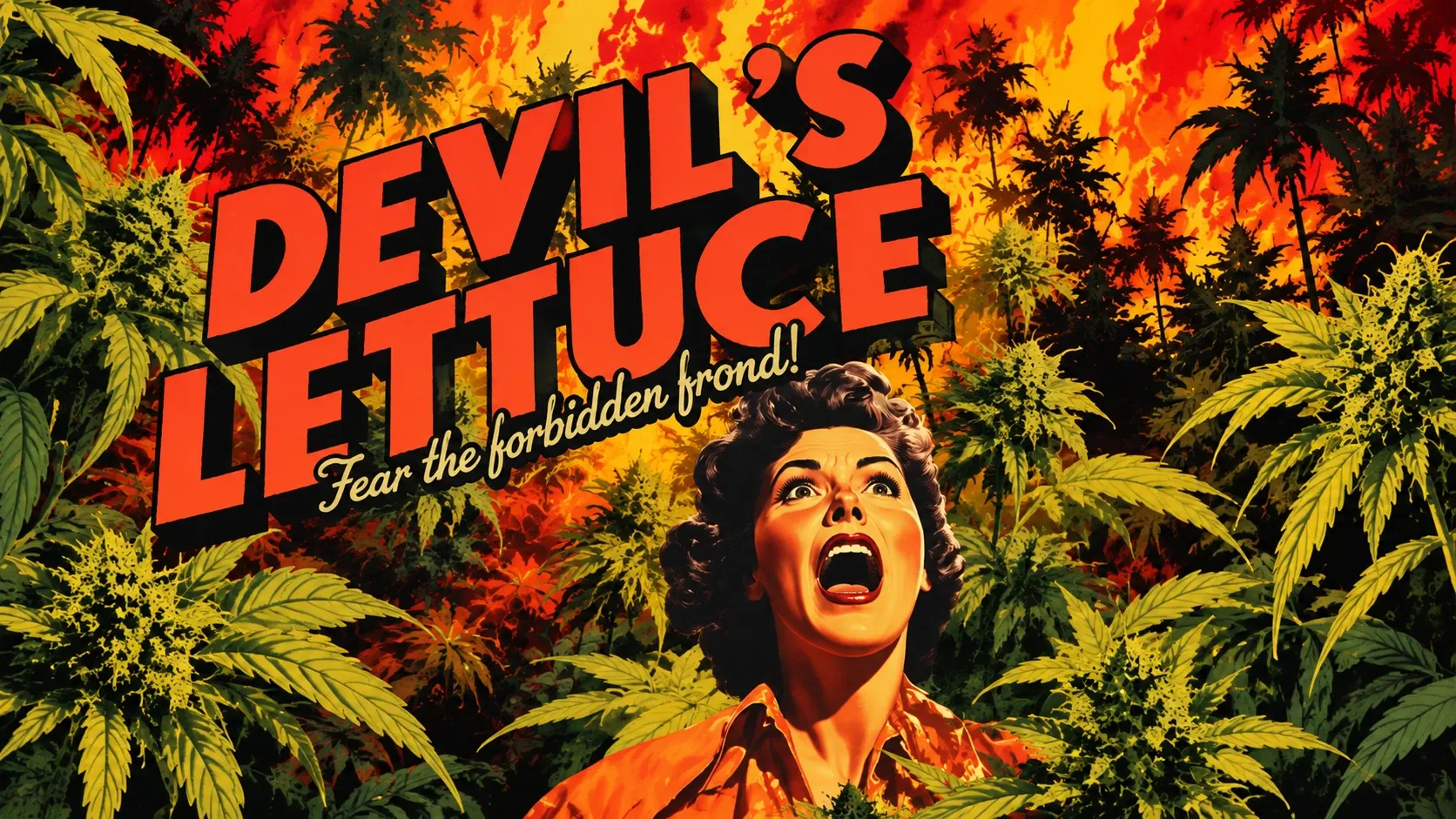
The Devil’s Lettuce: From Reefer Madness to Redemption
In the mid-1930s, independent filmmakers set out to get around the Hays Code, which regulated film morality. Using the pretense of educational material to bypass censorship guidelines, exploitation films depicted illicit topics like drug use, explicit sex, and sensational violence.
The most notorious cannabis exploitation film, Reefer Madness, shows what happens to “youthful marijuana victims” when they fall into “drug-crazed abandon.” Its trailer exclaimed, “Marijuana! The burning weed with its roots in hell!”
The portrayal of cannabis as a demonic substance capable of possessing those who smoke it became a theme of cannabis exploitation films that followed Reefer Madness and eventually led to a new slang term for the plant: the devil’s lettuce.
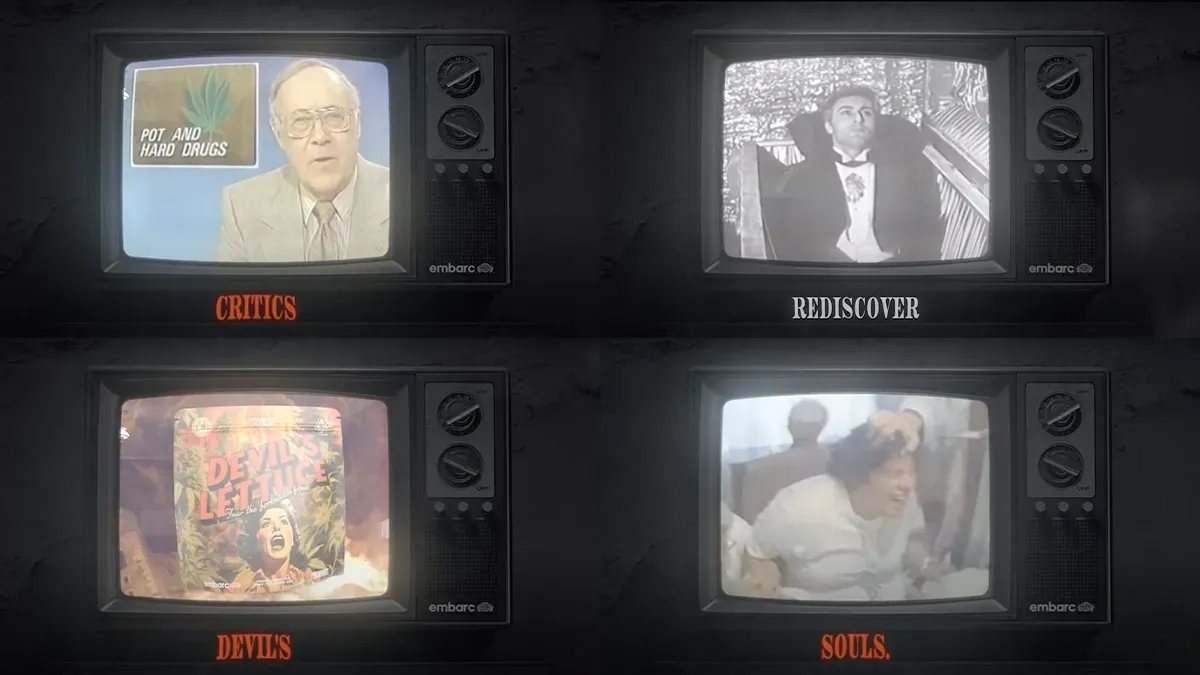
Devil's Lettuce: propaganda or pot redemption arc?
Cannabis & The Devil
Beyond Reefer Madness, other cannabis exploitation films expanded on the concept of cannabis as a demonic substance. By 1948, a cannabis scandal enveloped actor Robert Mitchum and a young actress he was seeing, Lila Leeds. While Mitchum was able to revive his career after the marijuana bust he and Leeds were involved in, Leeds’s career never recovered.
“The 1949 anti-pot propaganda film that Lila Leeds made after her pot bust with Robert Mitchum was alternatively titled She Shoulda Said No, or The Devil’s Weed,” cannabis activist and historian Ellen Komp said, noting the film was Leeds’s last film role.
Leeds’s last film was preceded by the 1942 cannabis exploitation film called The Devil’s Harvest, which frames cannabis as the “weed of satan.”
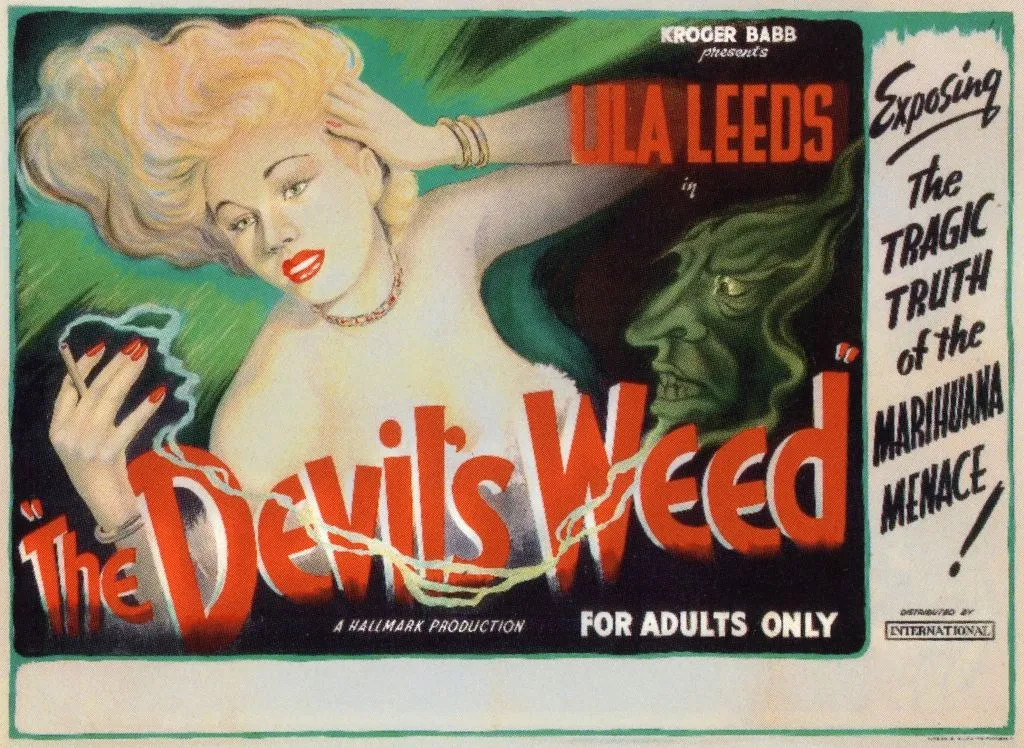
The Devil's Weed expanded on the reefer madness of the 1930s and '40s.
Anti-cannabis propaganda films capitalized on the cultural association between cannabis and the devil, which was established by religious moral panics and sensationalized anti-drug media. and the racialized politics of Harry Anslinger, who served as the first commissioner of the U.S. Treasury Department's Federal Bureau of Narcotics.
The term “devil’s lettuce” is associated with the diabolical undertones of cannabis in the era of the Hays Code, but became popularized somewhere around the late 1990s and early 2000s.
Interestingly, devil’s lettuce was the nickname of a wild fiddleneck plant that’s toxic to humans and livestock. The term began to be used more widely as a slang term for cannabis in the early 2000s.
Reclaiming The Devil’s Lettuce
Today, devil’s lettuce is used to satirize the drug panic of the 1930s and '40s. In 2023, embarc drew inspiration from the sensationalized imagery of cannabis exploitation films of the past, adopting the term “devil’s lettuce” within an award-winning ad campaign and product launch to show that there is no reason to fear a plant.
embarc’s campaign declares: “Fear the forbidden frond!” and depicts a screaming woman surrounded by cannabis plants.
“For many, fears surrounding cannabis are rooted in decades of societal narratives that have demonized a plant,” embarc said on the dedicated site Fear the Lettuce.
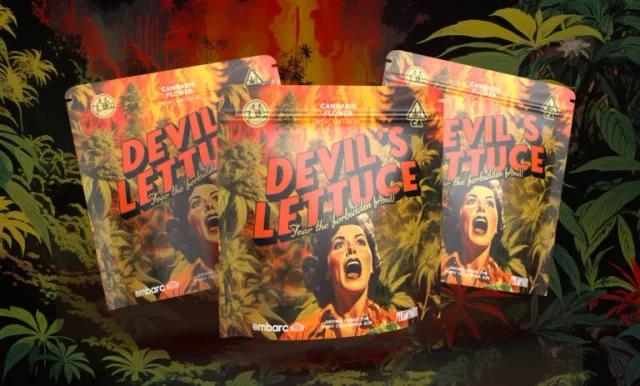
The embarc Devil's Lettuce product drop and campaign turned Reefer Madness upside down.
Company co-founder Lauren Carpenter said the campaign set out to achieve three big goals: “shine a light on injustice; highlight the plant's true power and celebrate its role in health, healing, and community.”
It's a notion that turns the original Reefer Madness ethos on its head—and attracted national attention.
“There’s so much to love about this campaign,” Adweek’s T.L. Stanley wrote of the devil's lettuce marketing, which the magazine named its best cannabis campaign of 2023.
The publication praised how embarc equated the stigma around cannabis with “monsters and villains from retro Hollywood horror flicks and PSAs."
Outdated Narratives Persist
The echoes of the Reefer Madness era persist to this day. Many communities continue to deny safe access to cannabis, citing safety concerns around establishing dispensaries. And, as wild as the scenes in the cannabis exploitation films might seem, the idea that cannabis causes psychological imbalances continues to make headlines.
The outdated social narratives that drive cannabis stigmas can overshadow the plant’s potential medicinal benefits. They can also overshadow the positive role cannabis dispensaries play as economic drivers, places for community building, and providers of products that serve as a pathway to wellness for so many.
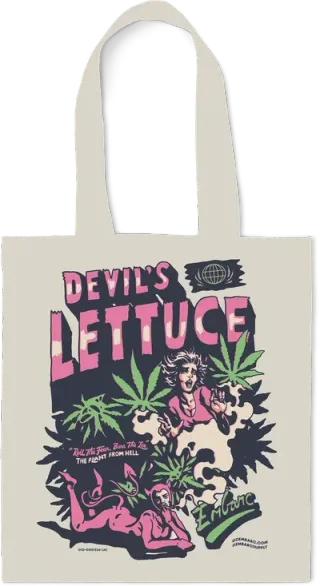
The most recent Devil's Lettuce Getaway bag from embarc.
The reclamation of devil's lettuce by embarc seeks to right the wrongs of the past and showcase cannabis as a positive asset to communities by playfully alluding to its depiction in cannabis exploitation films as the cause of moral panic. The idea is a world where cannabis is valued, not vilified.
“While embracing the fun of frights, our true mission is to clear away the cobwebs of misinformation, ensuring spooky stories of the plant stay fiction—not fact,” embarc said.
“Far from mocking legitimate concerns, the goal with this campaign is to remind us of where many fears were born and to facilitate dialogue around the truth about cannabis and the positive role it plays in communities.”